Tsutomu Yamaguchi’s story is one of the most remarkable survival accounts in modern history. In August 1945, he was in Hiroshima on a work assignment when a devastating explosion struck the city. He was about three kilometers from the blast and suffered severe burns, temporary blindness, and damaged hearing. Despite his injuries, he managed to spend the night in a shelter and, the next day, began the difficult journey back to his hometown of Nagasaki.
Still bandaged and weak, Yamaguchi reported to work on August 9. While explaining the destruction he had witnessed, another catastrophic explosion occurred over Nagasaki. Once again, he survived, this time protected by a sturdy concrete structure. His wife and infant son also lived through the event, though they faced exposure and hardship in the aftermath.
Years later, Yamaguchi was officially recognized by the Japanese government as a survivor of both attacks. He lived a long life, reaching the age of 93, though he dealt with lasting health effects. In his later years, he became a vocal advocate for peace, sharing his experiences globally and urging the world to reject nuclear weapons and prevent such tragedies from ever happening again.
VINGROUP NỘP NGÂN SÁCH CAO KỶ LỤC: GẤP 3,6 LẦN VIETTEL, GẤP GẦN 5 LẦN PETROLIMEX, GẤP 11,5 LẦN HÒA PHÁT
Theo báo cáo tài chính hợp nhất kiểm toán năm 2025 mới công bố, trong năm vừa qua, Tập đoàn Vingroup (VIC) đã thực nộp vào ngân sách nhà nước tổng cộng 148.773 tỷ đồng — tương đương hơn 5,6 tỷ USD, vượt qua kỷ lục của năm 2024.
Trước đó, năm 2024, Vingroup đã nộp ngân sách 56.163 tỷ đồng, con số này còn lớn hơn 15 tỉnh nộp thấp nhất (khi chưa sáp nhập) cộng lại. Con số năm 2025 gấp gần 2,65 lần kỷ lục đó.
So với những doanh nghiệp đã công bố số tiền nộp ngân sách năm 2025, số nộp ngân sách của Vingroup gấp 3,6 lần Viettel, gấp gần 5 lần Petrolimex, gấp 11,5 lần Hòa Phát và gần 12 lần của Vietcombank.
The universe is signaling where black holes are hiding – with smiley-like bursts of light.
When galaxies collide, their central supermassive black holes are expected to form tightly bound pairs. But these systems are incredibly hard to detect once they get close together, making them one of astronomy’s biggest missing pieces.
Now, scientists think they’ve found a way to spot them using light.
As two black holes orbit each other, their immense gravity bends light from stars behind them. This effect, called gravitational lensing, can briefly amplify the starlight into bright flashes. But unlike a single black hole, a pair creates repeating bursts as they move, almost like a cosmic blinking signal.
These flashes could reveal not just their presence, but their mass and motion as they spiral closer together.
If confirmed, this method could help astronomers find these systems years before future gravitational wave detectors come online.
In other words, some of the darkest objects in the universe may be revealed by the light they bend, not the light they emit.
Read the study:
“Black Holes as Telescopes: Discovering Supermassive Binaries through Quasiperiodic Lensed Starlight.” Physical Review Letters.
A baby has reportedly been born through a robot-controlled IVF procedure, marking a remarkable step forward in reproductive medicine — but the real story is even more fascinating than the headline. This wasn’t a “robot-made baby” in the science-fiction sense. Instead, researchers used an advanced automated IVF system to perform the highly delicate fertilization step known as ICSI, where a single sperm is injected into an egg. In this 2025 case, the process was carried out through a fully automated, digitally controlled system, and the resulting embryo led to the birth of a healthy baby. That makes it a genuine medical milestone, even if the wording online is often exaggerated.
What makes this breakthrough so important is the level of precision and consistency it could bring to fertility care. Traditional IVF and ICSI procedures require highly skilled embryologists and extremely steady hands, and even tiny differences in technique can matter. Automation could help standardize these fragile steps, reduce variability, and potentially make advanced fertility treatment more reliable over time. Researchers say the system handled 23 separate steps of the fertilization workflow, showing just how far reproductive technology is beginning to evolve.
For millions of couples and individuals struggling with infertility, this is about much more than robotics. It represents hope, access, and the possibility of better outcomes in one of medicine’s most emotionally intense fields. Of course, this technology is still in its early stages and will need much more testing, oversight, and ethical discussion before becoming common. But if it continues to improve, the future of fertility treatment may become more precise, more scalable, and more accessible than ever before.
This is not just a story about machines in a lab. It is a glimpse of a future where technology may help create life with greater care, accuracy, and possibility than ever before.
When it comes to destinations with historic castles, the Netherlands might not immediately spring to mind. However, the Dutch have some pretty breathtaking castles that you shouldn’t miss out on!
Grab your glass slippers and your best camera. Here’s a quick guide to 13 of the most beautiful castles and palaces the Netherlands has to offer.
In a rush to get that castle feeling? Skip on down to one of the options below.
This post might have affiliate links that help us write the articles you love, at no extra cost to you. Read our statement.
1. De Haar Castle, Utrecht
De Haar Castle in Utrecht is considered the most luxurious castle in the Netherlands. Dating all the way back to 1391, the castle grounds cover more than 135 acres. Even though many of the original gardens were destroyed during World War II, they’ve now been restored to their former glory.
You can find multiple beautiful lakes and charming bridges scattered across the castle’s grounds. The highlight of the garden, however, is a remarkable maze.
The castle also functions as a venue for multiple festivals and events. The most exciting (and dorky) one is the Elfia, an elf fantasy fair, where participants dress up as magical creatures and party all night long. 🧚♀️
📍 Location: Kasteellaan 1, 3455 RR Utrecht ⏰ Opening hours: Monday to Sunday, 11 AM to 5 PM 💰 Ticket prices: €21.50 for adults, €13.50 for children between the ages of 4 to 12, and free entry for children under the age of 4
2. Muiderslot Castle, Muiden
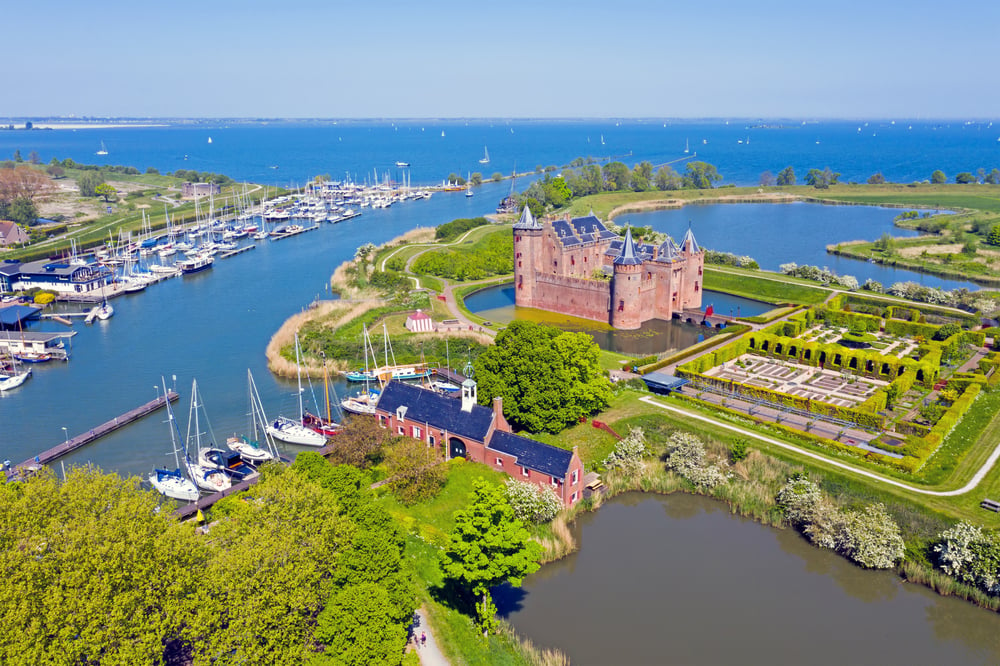
No wonder Muiderslot is on UNESCO’s list. Just look at this! Image: Depositphotos
The Muiderslot Castle in Muiden is a medieval castle built in 1370. It’s located close to Amsterdam, so it’s perfect for a quick visit if you happen to be in town.
The castle is also included in the UNESCO World Heritage List and has been featured in many movies and TV shows set in the Middle Ages (sadly, not Game of Thrones).
Today, Muiderslot operates as a national museum and is open to the general public for tours. To make the visit even more exciting, the castle has been restored to look as it would have during the 17th century.
📍 Location: Herengracht 1, 1398 AA Muiden ⏰ Opening hours: From April 1 to October 31, Monday to Sunday, 10 AM to 5 PM. From November 1 to March 31, Tuesday to Sunday, 10 AM to 5 PM 💰 Ticket prices: €19.50 for adults, €7.50 for children between the ages of 4 to 11, and free entry for children under the age of 3
- Advertisement -
3. Doorwerth Castle, Arnhem
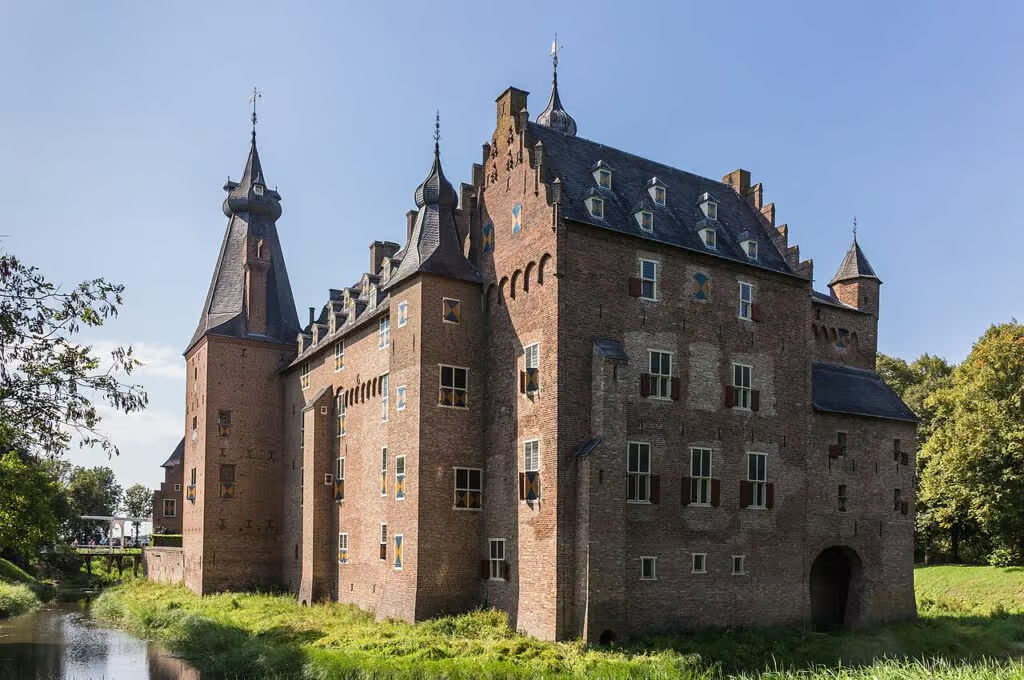
Doorwerth Castle is one of the many treasures the Netherlands has to offer. Image: Agnes Monkelbaan/Wikimedia Commons/CC4.0
The Doorwerth Castle near Arnhem is located along the river Rhine and is now home to three separate museums. It has a wealth of beautiful forests and meadows, and fields are located just behind the castle, where visitors can cycle or hike.
Unfortunately, the castle suffered great damage during World War II, but the interior has been restored to its 18th-century glory.
Doorwerth is also rumoured to be haunted! 👻 The TV show “Most Haunted” featured it on an episode in 2004 in an attempt to find paranormal activity.
Today, the castle operates as a hotel and a restaurant. So, if you’re looking for a bit of a thrill and maybe want to see a ghost, this is your chance!
📍 Location:Fonteinallee 2 B, 6865 ND Doorwerth ⏰ Opening hours: Tuesday to Sunday, 11 AM to 5 PM 💰 Ticket prices: €15 for adults, €7.50 for children between the ages of 4 to 18, and free entry for children under the age of 4
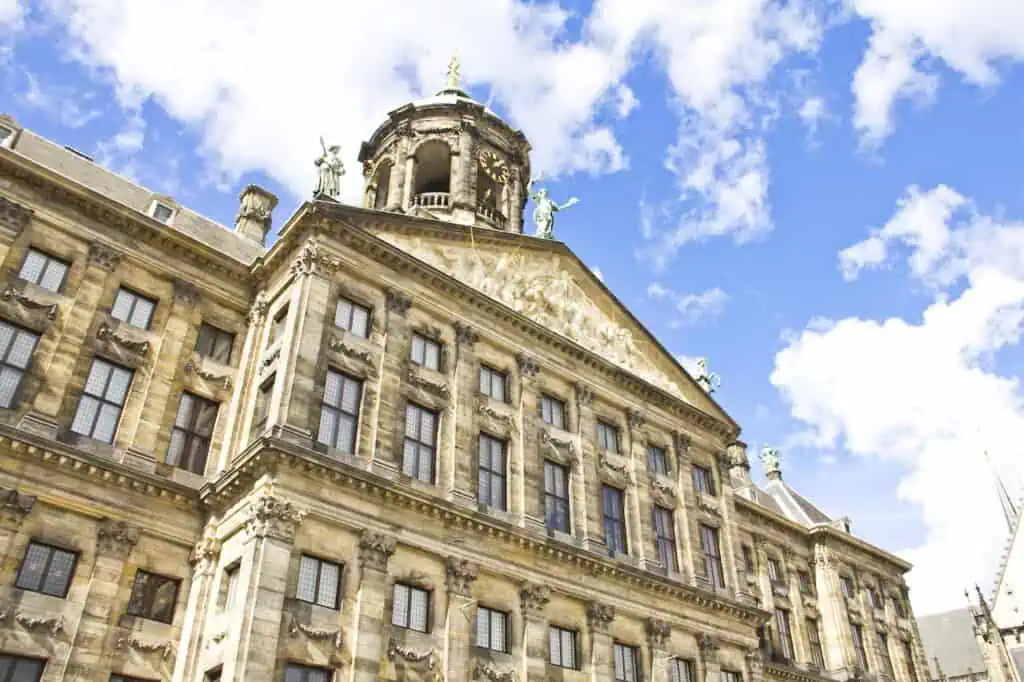
The Royal Palace is the largest and most distinguished building from the Golden Age, located right in the heart of Amsterdam.
- Advertisement -
It’s one of the most cherished monuments in the Netherlands and has set the stage for many of the country’s greatest events, like King Willem-Alexander and Queen Maxima‘s wedding reception.
When it’s not used for extravagant royal events, the palace opens its doors to visitors. You can listen to an audio guide as you wander the historic corridors, staring in awe at the imposing architecture.
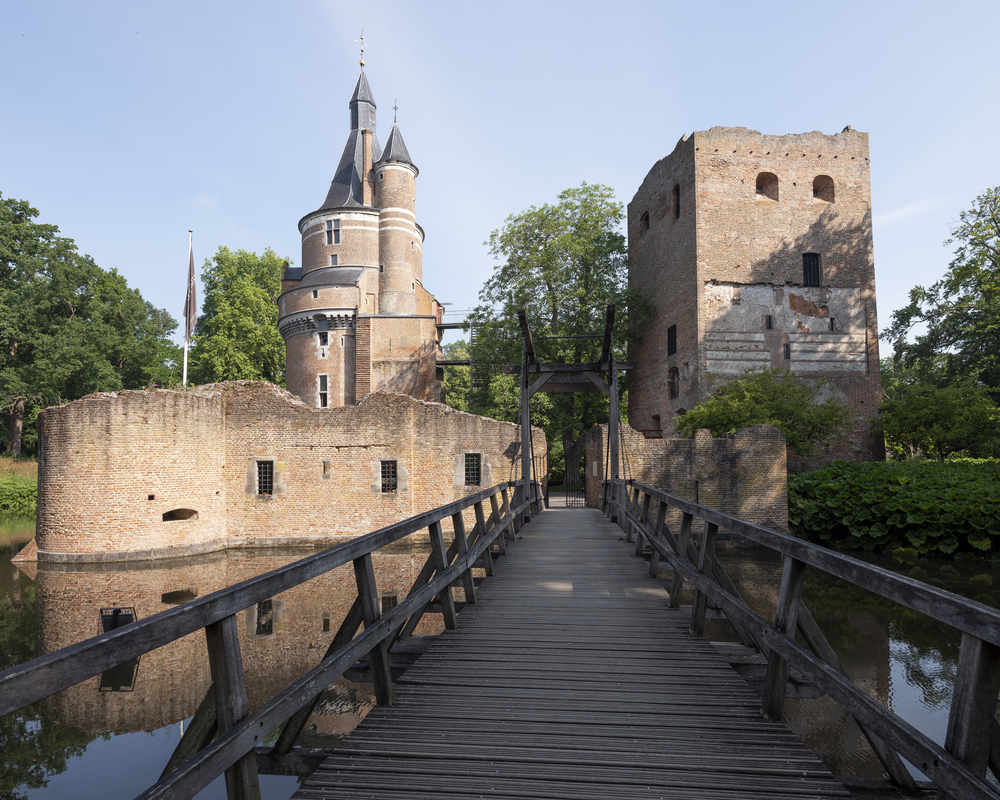
The one thing that really makes Duurstede Castle stand out is its tower (which looks like it should be housing Rapunzel). This 13th-century castle is located in Wijk bij Duurstede, in the province of Utrecht.
Originally built as a defensive structure, the castle now operates as a catering firm. The castle is still surrounded by a moat, so the only way you can access it is via the drawbridge (or by swimming, of course!).
The castle technically isn’t open to the general public. However, if there are no events taking place on Sundays, you can grab a bite and sit in the castle’s courtyard.
📍 Location: Langs de Wal 6, 3961 AB Wijk bij Duurstede ⏰ Opening hours: Open to the public on Sunday, 11 AM to 5 PM (if there are no events taking place) 💰 Ticket prices: None
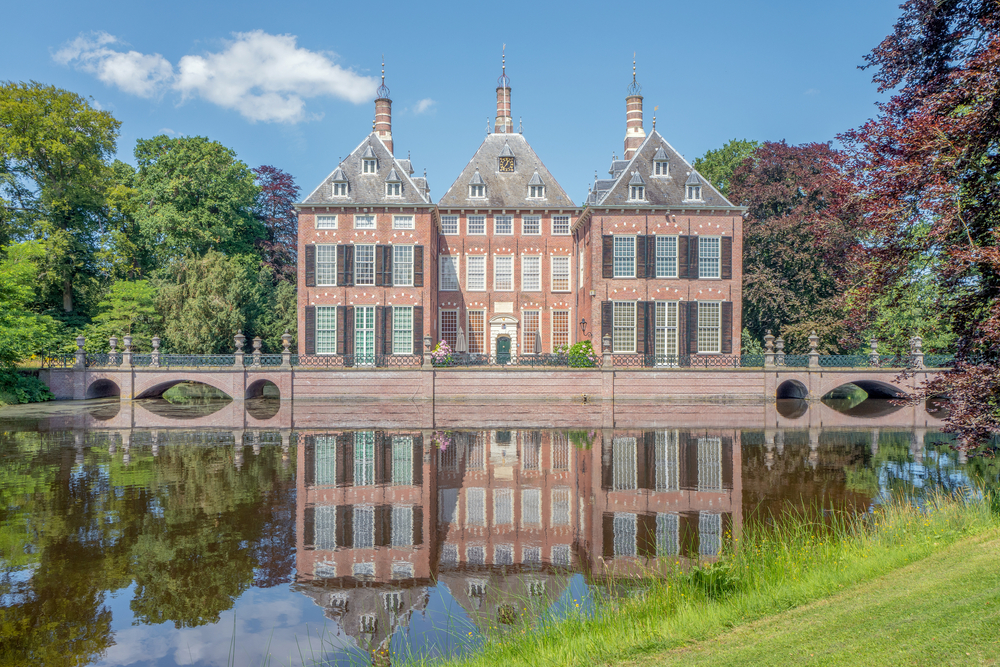
6. Duivenvoorde Castle, Voorschoten
Duivenvoorde Castle is a showstopper. Image: Depositphotos
When your Instagram account needs a little spice, head to the Duivenvoorde Castle. This beauty and the surrounding grounds make for a picture-perfect backdrop. It’s one of the oldest castles in the Netherlands, dating back to 1226.
Several noble families have lived here, but for the first five centuries of its existence, it was owned by just one family — the Van Duivenvoordes.
To this day, the castle has never been sold. Instead, its last private owner left the castle to a foundation upon her death in 1965.
If you visit, an audio tour will inform you of the castle’s long and rich history. Be sure to spend some time in lovely gardens as well.
Another important note: while the grounds are already open for admiring, the general castle and interior tours are not open until April 16th.
📍 Location: Laan van Duivenvoorde 4, 2252 AK Voorschoten ⏰ Opening hours: Sunday, 11:00 AM to 5 PM — but do check for seasonal updates. 💰 Ticket prices: €16.50 for adults, €8.50 for children between the ages of 5 to 17, and free entry for children under the age of 4
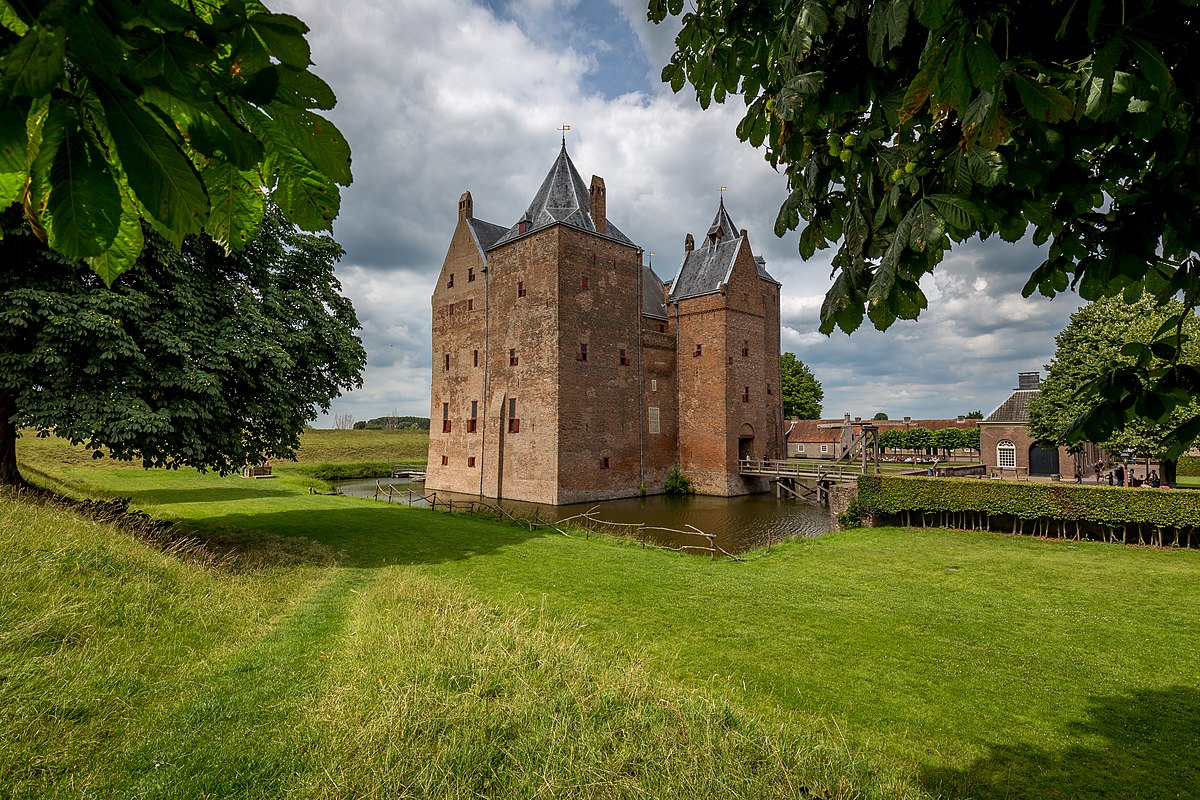
7. Loevestein Castle, Zaltbommel
It’s even nice on a typically Dutch (i.e. cloudy) day. Image: Davidh820/Wikimedia Commons/CC4.0
Loevestein Castle, or Slot Loevestein as it’s called in Dutch, roughly translates to “Loef’s stone house”. Historians believe the castle was constructed between 1357 and 1397, but there’s no official documentation to prove it.
Loevestein Castle’s initial function was to collect tolls from trading ships passing through the river. However, with time, the construction grew bigger until it became a full-blown castle.
The castle’s museum features three important eras in the structure’s history: the Middle Ages, the State Prison period, and the Dutch Waterline period. The castle houses multiple events throughout the year, the most popular being the Winterfeest celebration during the holiday season.
📍 Location: Loevestein 1, 5307 TG Poederoijen ⏰ Opening hours: Monday to Sunday, 10 AM to 5 PM 💰 Ticket prices: €17 for adults, €11.50 for children between the ages of 4 to 12, and free entry for children under the age of 3
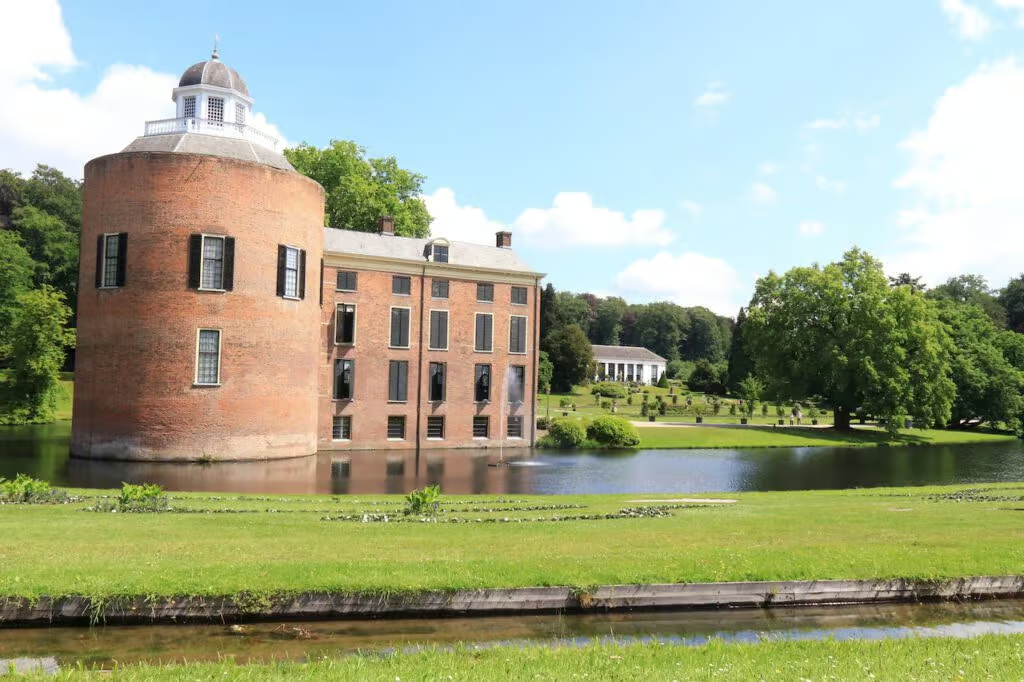
8. Rosendael Castle, Arnhem
Not only is this Dutch castle gorgeous, look at those grounds! Image: Dreamstime
Just outside Arnhem and the Veluwe National Park, Rosendael Castle is a beautiful place to visit for a good and heavy dose of both history and nature. Built by the Duke of Guelders more than seven centuries ago, this impressive castle is chock-full of extravagant surprises.
The castle fell into disrepair after being struck by a bomb during WWII. Fortunately, it’s since been through a full restoration and is now open to the public. You can learn about this (and more) during a guided audio tour as you browse the impressive display of silver, porcelain, and furniture.
📍 Location: 6891 DA Rozendaal ⏰ Opening hours: Tuesday to Saturday, 11:30 PM to 4 PM, Sunday, 11 AM to 4 PM (12:30 PM to 2:30 PM if you want to visit without a tour). 💰 Ticket prices: €15 for adults, €7.50 for children between the ages of 4 to 18, and free entry for children under the age of 4
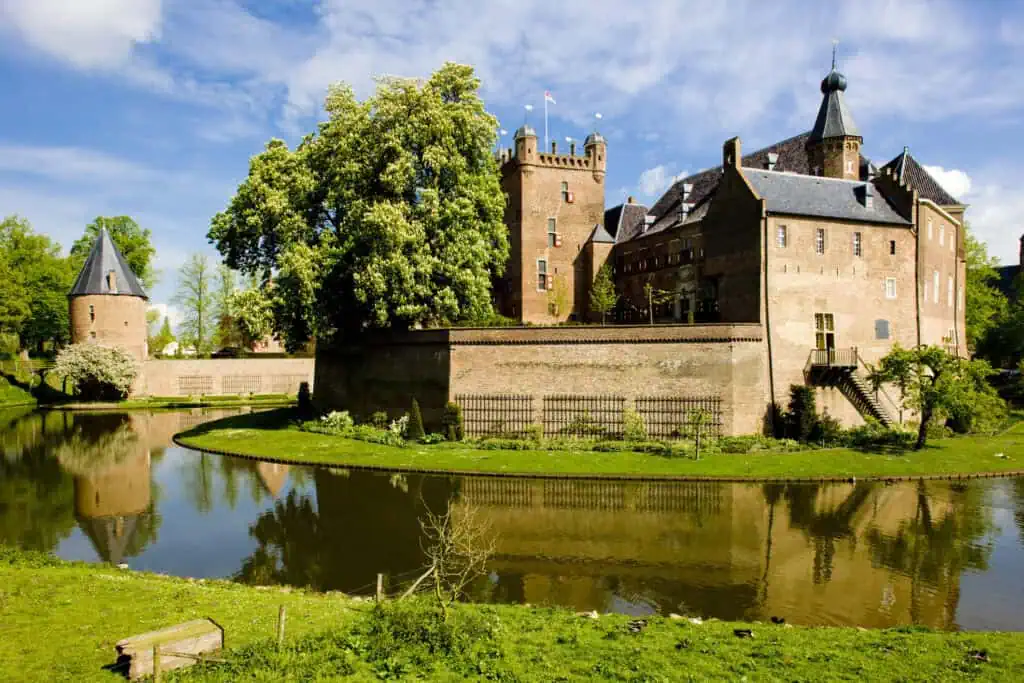
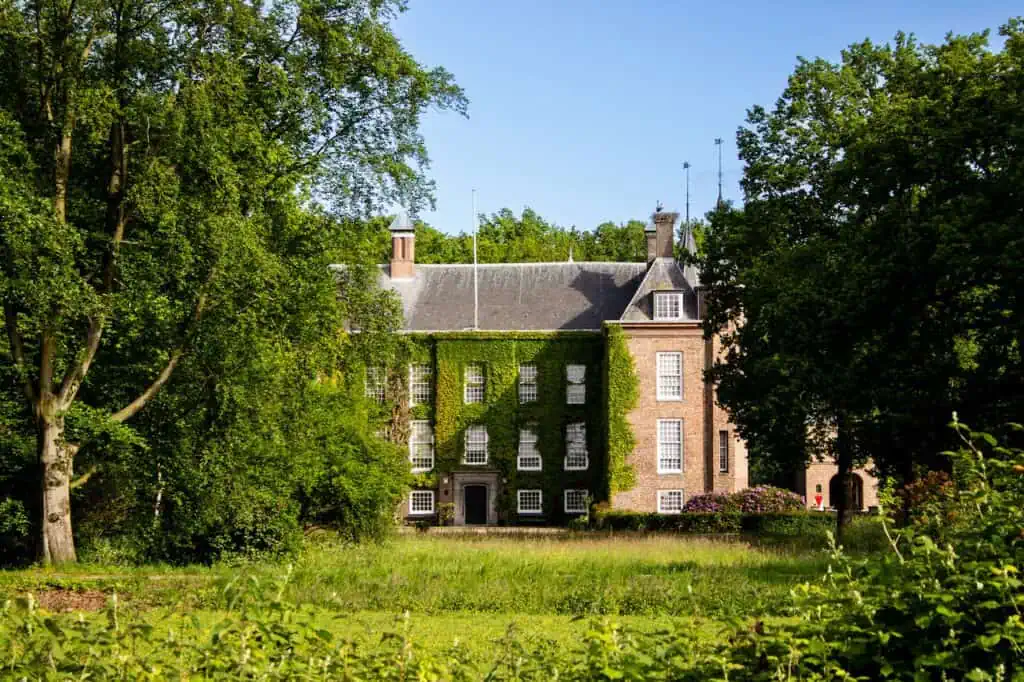
We don’t know much about the history of Huis Bergh (but we do love a bit of mystery). But what we do know is that the castle dates back to the 13th century and is among the biggest castles in the Netherlands. It’s also surrounded by a moat, which defended the castle in the Middle Ages.
Currently, Huis Bergh is home to a large collection of early Italian paintings and extraordinary medieval handwriting. The castle also hosts weddings, so it’s perfect if you want your special day to be like a fairy tale.
Unfortunately, the castle is currently closed for renovations. Some activities are still possible!
📍 Location: Hof van Bergh 8, 7041 AC ‘s-Heerenberg ⏰ Opening hours: This museum is currently closed for renovations. 💰 Ticket prices: This museum is currently closed for renovations.
10. Zuylen Castle, Utrecht
If you look closely, Mr Darcy is standing in one of the windows. Image: Dreamstime
Just north of Utrecht, in the village of Oud-Zuilen, you’ll find this dreamy 13th-century castle. The lush garden is perfect for a stroll, and the castle will wow you with its rich history of feminism, literature, weaponry, and robbery.
Zulyen Slot’s biggest claim to fame, however, is probably the fine tapestry it holds. It was made by the prestigious Dutch carpet weaver, Maximiliaan van der Gught. He was one of the best in Europe, supplying tapestries to the royal houses of Poland and Sweden, among others.
📍 Location: Tournooiveld 1, 3611 AS Oud Zuilen ⏰ Opening hours: High Season (April to October) Wednesday to Sunday, 11 AM to 5 PM; Low Season (November to March) Friday to Sunday, 11 AM to 5 PM 💰 Ticket prices: €16 for adults, €13 for students, €8 for children between the ages of 4 to 15, and free entry for children under the age of 4
11. Paleis het Loo, Apeldoorn
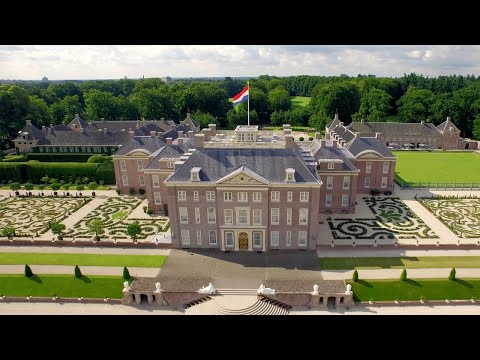
Paleis het Loo was built between 1684 and 1686 for the stadtholder-king at the time, William of Orange, and his wife, Mary II of England.
The palace is today a state museum that is open to the general public at all times. Its interior displays original furniture, as well as objects and paintings of the House of Orange-Nassau.
Paleis het Loo is also home to a library devoted to the House of Orange-Nassau. It also houses the Chancellery of the Museum of the Netherlands Orders of Knighthood, displaying books and other items, such as decorations and medals.
The palace has been appointed a national monument and is among the Top 100 Dutch Heritage Sites. The palace’s Dutch Baroque garden is often referred to as the “Versailles of Holland” because it’s been constructed in perfect symmetry, with fountains, basins, and statues scattered across its grounds.
📍 Location: Koninklijk Park 16, 7315 JA Apeldoorn ⏰ Opening hours: Tuesday to Sunday, 10 AM to 5 PM 💰 Ticket prices: €21 for adults, €9.50 for children between the ages of 4 to 12, and free entry for children under the age of 4, €50 for a family ticket
12. Kasteel Doornenburg, Doornenburg
A frolic through the fields to a castle, anyone? Image: Depositphotos
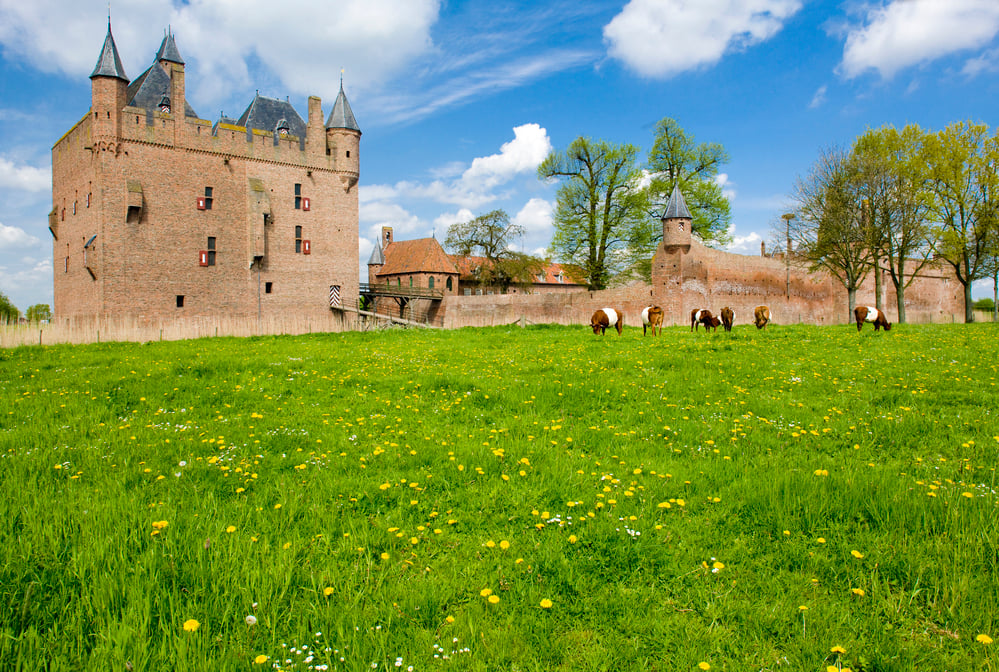
Kasteel Doornenburg in Gelderland has the largest outer bailey or courtyard-surrounding wall of any castle in the Netherlands. It also has a wooden bridge connecting another smaller castle, Herberg de Doornenburg — hieperdepiep, two castles for one visit!
The oldest parts of the castle date back to the 14th century, and it has two vaulted cellars. This medieval castle sits on acres of sprawling farmland, which is why there is a medieval farmhouse and all those koeien (cows) strolling about.
Visiting the main castle is only possible with a guided or audio tour, so make sure to check availability before loading up the car.
📍 Location: Kerkstraat 27, 6686 BS Doornenburg ⏰ Opening hours: Starting March 31st, Kasteel Doorneburg, Saturdays and Sundays, 11 AM to 4:30 PM. Herberg de Doorneburg’s hours are announced weekly. 💰 Ticket prices: €12.50 for adults, €7.50 for children between the ages of 4 to 12, and free entry for children under the age of 4, free for Museum Card holders
13. Valkenburg Castle, Valkenburg aan de Geul
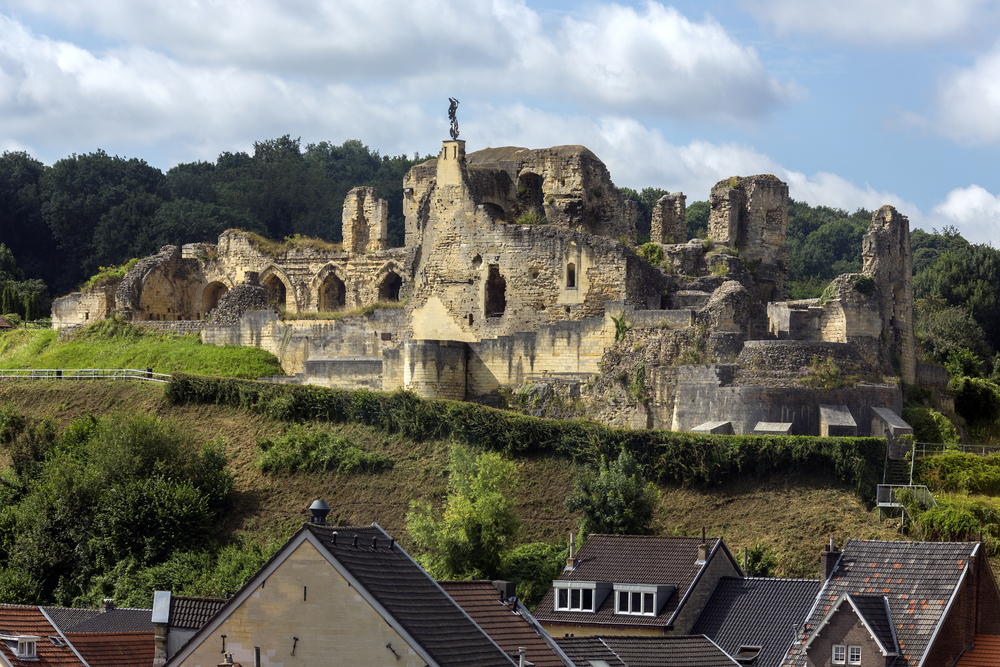
Your eyes are not deceiving you…that is indeed a hill…in the Netherlands! Image: Depositphotos
Unfortunately, what remains of Valkenburg Castle is only ruins. It dates back to the 11th century and is considered unique in the Netherlands since it’s the only castle built on a hill.
Over the years, Valkenburg Castle was destroyed multiple times during sieges, and its final destruction occurred on December 10, 1672, at the hands of Stadtholder Willem III.
Today, the castle’s remains are open to tours, allowing visitors to walk through what was once a proud fortress in the Geul Valley. It’s the perfect place for a day trip!
📍 Location: Daalhemerweg 27, 6301 BJ Valkenburg ⏰ Opening hours: Monday to Sunday, 10 AM to 5:30 PM 💰 Ticket prices: €16.50 for adults, €12 for children between the ages of 6 to 11, and free entry for children under the age of 6
There are some truly beautiful castles in the Netherlands! 🏰 Spanning tens of different centuries, each one has its own quirks and history, and we are truly enamoured.
What’s your favourite castle in the Netherlands? Tell us in the comments below!