TOP 5 QUÁN PHỞ Ở PHÁP ĐƯỢC NHIỀU NGƯỜI VIỆT YÊU THÍCH
Sống ở Pháp nhưng vẫn thèm một tô phở nóng hổi đúng vị quê nhà? Dưới đây là 5 quán phở được nhiều người Việt và thực khách quốc tế đánh giá cao mà bạn nên thử một lần:
1. Pho 14 (Paris 13) Một trong những quán phở nổi tiếng nhất Paris, nước dùng đậm đà, thịt bò mềm và lúc nào cũng đông khách.
2. Song Heng (Paris 13) Quán nhỏ nhưng rất được lòng người Việt với phở bò, bún và các món ăn mang hương vị truyền thống.
3. Pho Bida Vietnam (Paris) Nổi tiếng với tô phở đầy đặn, nước dùng thanh ngọt và mức giá hợp lý.
4. Hanoi Cà Phê (Paris) Không gian hiện đại, ngoài phở còn có nhiều món ăn Hà Nội hấp dẫn, phù hợp cả khách Việt và bạn bè quốc tế.
5. Le Petit Cambodge (Paris) Dù nổi tiếng với ẩm thực Đông Dương, quán cũng có món phở được nhiều thực khách yêu thích, đặc biệt tại khu Canal Saint-Martin.
Bạn đã thử quán nào trong danh sách này chưa? Hay còn quán phở nào ở Pháp mà bạn thấy "chuẩn vị Việt" hơn? Hãy chia sẻ địa chỉ yêu thích của bạn dưới phần bình luận để mọi người cùng khám phá nhé!
Scientists at Kyushu University in Japan just shattered the theoretical ceiling that has defined solar cell physics for sixty years — achieving 130 percent energy conversion efficiency using a technique that turns one photon of sunlight into more than one unit of usable energy. Researchers from Kyushu University, working with collaborators at Johannes Gutenberg University Mainz in Germany, developed a new approach using a molybdenum-based metal complex known as a spin-flip emitter to capture extra energy generated through a quantum process called singlet fission — a phenomenon long described by physicists as a dream technology for pushing past the conventional solar efficiency limit. In conventional solar cells, a single photon can only liberate a single electron to generate electricity regardless of how much energy it carries. Singlet fission splits the energy of one high-energy photon into two separate electron-generating events, extracting work from energy that standard silicon panels simply waste as heat.
The 130 percent figure describes quantum efficiency — the ratio of electron-generating events to absorbed photons — rather than the overall energy conversion efficiency of a complete solar module, which remains subject to additional thermodynamic constraints. But achieving greater than 100 percent quantum efficiency at all is the physical breakthrough the field has been working toward for years, because it proves that the fundamental mechanism for exceeding the conventional solar efficiency ceiling actually works in real materials rather than only in theoretical calculations.
What the Kyushu team built is the proof of concept. The engineering pathway from this laboratory demonstration to a commercial solar cell that captures this extra efficiency in a manufacturable, durable format remains a significant research challenge. But the impossible just became possible — and solar physics is not going back to where it was before this result.
Source: ScienceDaily / Kyushu University / Journal of the American Chemical Society, March 28, 2026
An iron oxide material that breathes oxygen like a living organism just became one of the most promising catalysts ever discovered for producing clean hydrogen at industrial scale. Scientists have developed an iron oxide oxygen sponge capable of efficiently splitting water through a thermochemical process called chemical looping, where the material alternately absorbs and releases oxygen as it cycles between oxidized and reduced states, driving the water splitting reaction that produces hydrogen without any direct carbon emissions as a byproduct. The material's behavior mirrors a biological process — inhaling and exhaling oxygen repeatedly without degrading — but delivers it at the extreme temperatures required for industrial thermochemical hydrogen production.
What makes iron oxide particularly compelling as the foundation for this technology is its extraordinary abundance and low cost compared to the precious and rare metals that most high-performance catalysts require. Iron is the most widely produced metal on Earth, extracted from iron ore deposits found on every inhabited continent. A hydrogen production technology built on iron oxide rather than platinum, iridium, or ruthenium removes the supply chain vulnerability and cost premium that have historically kept thermochemical hydrogen from competing economically with natural gas-derived hydrogen at commercial scale.
The oxygen sponge mechanism also offers an efficiency advantage over direct water electrolysis by operating at high temperatures where the thermodynamics of water splitting are more favorable, allowing more of the input heat energy to convert into hydrogen rather than being lost to entropy. Paired with concentrated solar thermal energy or nuclear process heat — both of which produce high-temperature heat that conventional photovoltaic panels cannot generate — the iron oxide oxygen sponge could become a critical component of industrial-scale clean hydrogen supply chains within this decade.
Announced by Elon Musk on June 23, Starmind is the official designation for SpaceX's planned AI satellite megaconstellation — a network designed not for internet access but for distributed computing in orbit. The name slots into SpaceX's expanding star-themed ecosystem alongside Starship, Starlink, Starshield, Starbase, Starfactory, and the recently launched Starfall cargo return capsule.
The concept builds on a vision Musk outlined in February 2026: satellites that directly harness near-constant solar power in orbit, where "it's always sunny in space," running large-scale AI workloads without the land, energy, and cooling costs of terrestrial data centers. The long-term architecture involves a constellation scaling toward one million satellites operating as interconnected orbital data centers, connected to each other through high-speed laser links.
SpaceX is uniquely positioned to attempt this. Starlink already operates approximately 10,700 active satellites — the largest constellation ever deployed — giving the company the only real-world experience managing satellite infrastructure at anything approaching this scale. Starmind would build on that foundation while shifting the purpose from connectivity to computation.
The distinction matters. Starlink passes data between users and Earth. Starmind would process data in orbit, running AI models directly on the satellite hardware rather than routing everything to ground-based servers. The satellites become the computer, not just the pipe.
A million satellites. An orbital AI. A new name for an idea that keeps getting larger
Mô hình thời tiết "khối chặn Omega" đang khiến Tây Âu trải qua đợt nắng nóng kỷ lục, với vòm nhiệt bao phủ nhiều khu vực.
Tây Âu đang hứng chịu đợt nắng nóng gay gắt, gây gián đoạn cuộc sống ở nhiều nước. Pháp ngày 24/6 ghi nhận nhiệt độ trung bình ngày 30 độ C, cao nhất kể từ khi bắt đầu ghi nhận số liệu vào năm 1947. Hơn nửa quốc gia này nằm trong cảnh báo nhiệt màu đỏ, mức cao nhất tại nhiều nước châu Âu, với hàng chục nghìn hộ gia đình ở miền tây bị mất điện.
Anh, Tây Ban Nha đều ghi nhận ngày tháng 6 nóng kỷ lục kể từ năm 1950. Tại Italy, 16 cảnh báo đỏ đang có hiệu lực, hầu hết ở miền bắc và miền trung nước này.
Theo các nhà khoa học, đợt nắng nóng hiện nay được thúc đẩy bởi mô hình thời tiết gọi là "khối chặn Omega", gồm một vùng áp cao lớn nằm giữa hai vùng áp thấp. Cấu trúc này có thể duy trì ổn định trong nhiều ngày, thậm chí nhiều tuần, khiến hệ thống thời tiết khác khó di chuyển vào.
Chính vùng áp cao bị mắc kẹt này tạo điều kiện cho vòm nhiệt (heat dome) hình thành trên phần lớn Tây và Trung Âu, biến khu vực thành một "lò nung".
Một người dân tự làm mát bên đài phun nước gần tháp Eiffel ở Paris, Pháp ngày 24/6. Ảnh: AP
"Vòm nhiệt về cơ bản là những hệ thống áp cao gần như đứng yên trong vài ngày, giữ lại lượng nhiệt và độ ẩm nguy hiểm bên dưới", Mireia Ginesta, nhà nghiên cứu khí hậu tại Trường Smith về Doanh nghiệp và Môi trường, Anh, nói với AP.
Theo bà Ginesta, áp cao đồng nghĩa với việc không khí đang chìm xuống các tầng thấp hơn của khí quyển. "Khi không khí đi xuống các độ cao thấp hơn, nó bị nén lại. Áp suất tăng lên và nhiệt độ cũng tăng theo", bà Ginesta tiếp tục.
Quá trình này khiến không khí bên dưới ngày càng nóng hơn. Đồng thời, áp cao làm giảm sự hình thành mây và khiến gió yếu đi. Khi ít mây che phủ hơn, nhiều bức xạ Mặt Trời đến được mặt đất hơn. Lượng nhiệt tích tụ trong nhiều ngày liên tiếp tạo nên những đợt nóng kéo dài, còn gọi là sóng nhiệt.
"Vòm nhiệt là hiện tượng xảy ra trong dòng khí quyển ở tầng cao, còn sóng nhiệt là cái nóng mà chúng ta cảm nhận trực tiếp ở mặt đất", theo Jennifer Francis, nhà khoa học khí hậu thuộc Trung tâm Nghiên cứu Khí hậu Woodwell, Mỹ.
Vòm nhiệt cũng có thể dẫn đến các cơn dông với lượng mưa lớn, gió giật mạnh và mưa đá.
Vòm nhiệt khiến khí nóng tích tụ trên mặt đất. Đồ họa: Washington Post
Các chuyên gia nhấn mạnh rằng đây là hiện tượng tự nhiên và không chỉ xảy ra ở châu Âu.
Những năm gần đây, các đợt vòm nhiệt tương tự cũng xuất hiện tại Mỹ, Canada, Australia và Nam Á. Tuy nhiên, trong bối cảnh nhiệt độ trung bình toàn cầu liên tục tăng, cùng một kiểu hình thời tiết hiện nay có thể tạo ra mức nhiệt cao hơn đáng kể so với trước đây.
Theo Cơ quan Biến đổi Khí hậu Copernicus của Liên minh châu Âu (EU), nhiệt độ trung bình toàn cầu hiện cao hơn khoảng 1,4°C so với thời kỳ tiền công nghiệp. Mức tăng của châu Âu đã đạt khoảng 2,4°C, trở thành lục địa nóng lên nhanh nhất thế giới.
"Gần như toàn bộ lượng nhiệt này bắt nguồn từ hiệu ứng nhà kính do con người gây ra từ phát thải nhiên liệu hóa thạch, còn cách phân bố thực tế của lượng nhiệt dư thừa này lại phụ thuộc nhiều yếu tố", Ben Clarke, nhà nghiên cứu về thời tiết cực đoan và biến đổi khí hậu tại Cao đẳng Hoàng gia London, Anh, nói với AFP.
Bên cạnh yếu tố toàn cầu, một số đặc điểm khu vực cũng khiến châu Âu nhạy cảm hơn với biến đổi khí hậu. Một trong số đó là việc châu Âu nằm gần khu vực Bắc Cực, nơi đang nóng lên nhanh hơn phần còn lại của thế giới, với mức tăng khoảng 3,2°C so với thời kỳ tiền công nghiệp, theo Copernicus.
Sự nóng lên của Bắc Cực đi kèm với hiện tượng gọi là "phản xạ albedo". Khi băng và tuyết tan, các bề mặt tối như đất liền và đại dương lộ ra, hấp thụ nhiều nhiệt hơn so với bề mặt trắng phản xạ ánh sáng. Điều này làm gia tăng lượng nhiệt giữ lại trong hệ thống khí hậu.
Carlo Buontempo, giám đốc Copernicus, cho biết nhiều khu vực ở châu Âu từng có mùa đông với điều kiện đóng băng thường xuyên nay không còn duy trì được trạng thái đó.
"Điều này đồng nghĩa với việc bề mặt đất tối màu được phơi lộ nhiều hơn thay vì được che phủ bởi tuyết trắng", ông Buontempo nói. Khi mặt đất hấp thụ nhiều năng lượng Mặt Trời hơn, nhiệt độ khu vực tiếp tục tăng lên.
Một yếu tố khác là sự suy giảm ô nhiễm aerosol tại châu Âu trong nhiều thập kỷ qua. Aerosol là các hạt cực nhỏ lơ lửng trong một không khí, có khả năng phản xạ một phần ánh sáng Mặt Trời và làm tăng khả năng phản xạ của mây. Khi lượng aerosol giảm nhờ các chính sách môi trường, lượng bức xạ từ Mặt Trời tới được bề mặt Trái Đất cũng nhiều hơn.
"Giảm ô nhiễm không khí là vô cùng quan trọng đối với sức khỏe hô hấp, nhưng cũng làm tăng lượng bức xạ Mặt Trời tại bề mặt, vì nhiều loại hạt vật chất trong không khí có xu hướng làm lệch hướng ánh sáng Mặt Trời", chuyên gia Clarke nói.
Nhiệt độ tại Tây Âu ngày 24/6. Đồ họa: CNN
Koh Tieh Yong, giảng viên tại Đại học Quốc gia Singapore, nói với Channel News Asia rằng vòm nhiệt về bản chất là một cơ chế tự nhiên của khí quyển, nhưng lưu ý hiện tượng này và tình trạng biến đổi khí hậu có thể có liên quan.
Quá trình ấm lên toàn cầu, đặc biệt là sự nóng lên nhanh hơn ở Bắc Cực, có thể làm suy yếu luồng gió mạnh ở tầng cao khí quyển và khiến điều kiện hình thành vòm nhiệt trở nên thuận lợi hơn, theo ông Koh.
Liz Bentley, giám đốc Hiệp hội Khí tượng Hoàng gia Anh, chung quan điểm.
"Biến đổi khí hậu chắc chắn đang khiến các đợt nắng nóng xuất hiện thường xuyên hơn, gay gắt và kéo dài hơn so với trước đây", bà Bentley nói.
France has introduced legislation requiring many large outdoor parking lots to install solar panel canopies or, in some cases, provide significant shade through trees or other solutions. The policy is designed to increase renewable energy production while reducing urban heat and improving the comfort of public spaces.
Solar canopies allow parking lots to generate clean electricity without using additional land, while shaded areas help lower temperatures for parked vehicles and reduce the urban heat island effect. The initiative is part of France's broader strategy to accelerate renewable energy deployment, cut greenhouse gas emissions, and make better use of existing infrastructure.
The measure has attracted international attention as an innovative way to combine climate action with practical urban planning. Supporters believe similar policies could help other countries expand solar energy capacity while creating cooler, more sustainable cities.
Source: renewable energy legislation on parking lot solar canopies and national climate initiatives.
Top 10 chương trình vũ khí bí ẩn nhất thế giới đang được phát triển
(VTC News) -
Nhiều chương trình quân sự hàng tỷ USD vẫn đang được bao phủ bởi bức màn bí mật khiến giới tình báo và chuyên gia quốc phòng không ngừng theo dõi.
Trong thế giới quân sự hiện đại, những dự án vũ khí quan trọng nhất thường không xuất hiện trong các cuộc triển lãm hay thông cáo báo chí. Thay vào đó, chúng chỉ lộ diện qua những bức ảnh vệ tinh, các tài liệu ngân sách hoặc những tuyên bố hiếm hoi từ giới chức quốc phòng. Năm 2026, nhiều chương trình đang được phát triển tại Mỹ, Trung Quốc và Nga vẫn khiến giới phân tích quốc tế tranh cãi về khả năng thực sự của chúng.
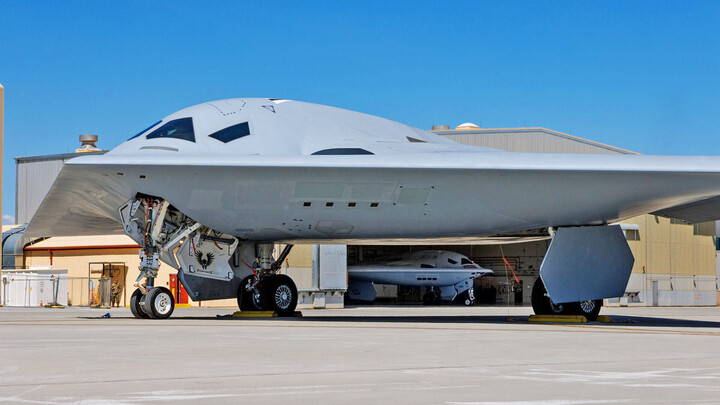
B-21 Raider của Mỹ. Ảnh TWZ
10. B-21 Raider Block nâng cấp (Mỹ)
Oanh tạc cơ tàng hình B-21 Raider đã được công khai, nhưng phần lớn năng lực tác chiến thực sự của phiên bản sản xuất hàng loạt vẫn được giữ bí mật. Không quân Mỹ xác nhận máy bay được thiết kế theo kiến trúc mở, cho phép tích hợp các cảm biến, trí tuệ nhân tạo và vũ khí mới trong tương lai mà không cần thay đổi thiết kế tổng thể. Nhiều chuyên gia cho rằng những khả năng quan trọng nhất của B-21 vẫn chưa được tiết lộ.
9. Type 100 và biến thể hạng nặng (Trung Quốc)
Cuối năm 2025, Trung Quốc lần đầu công khai xe tăng thế hệ mới Type 100. Chỉ vài tháng sau, các hình ảnh về một biến thể lớn hơn, nặng hơn xuất hiện trên mạng xã hội Trung Quốc.
Điều gây tò mò là Bắc Kinh chưa công bố bất kỳ thông số chính thức nào. Nhiều nhà phân tích nhận định đây có thể là chương trình xe tăng thế hệ mới tham vọng nhất hiện nay với tháp pháo không người lái, cảm biến hợp nhất và khả năng điều khiển máy bay không người lái chiến thuật.
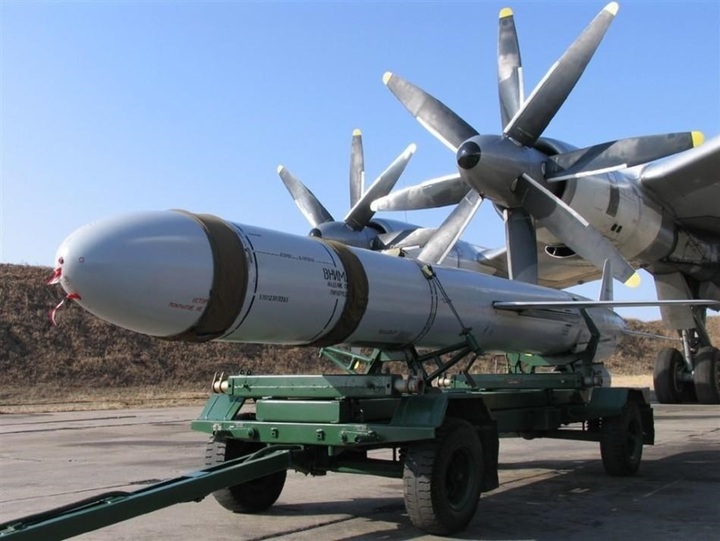
Tên lửa Kh-55. Ảnh Deagel
8. Kh-95 (Nga)
Kh-95 được cho là tên lửa hành trình siêu vượt âm thế hệ mới dành cho các oanh tạc cơ chiến lược Nga. Tuy nhiên đến nay rất ít hình ảnh hoặc thông số kỹ thuật được công bố.
Một số nguồn tin cho rằng tên lửa có khả năng bay ở tốc độ siêu vượt âm trong phần lớn hành trình và sẽ trở thành vũ khí chủ lực của Tu-160M và oanh tạc cơ tương lai PAK DA.
7. "Quái vật biển Bột Hải" (Trung Quốc)
Sự xuất hiện của phương tiện được phương Tây đặt biệt danh là "Bohai Sea Monster" đã làm dấy lên nhiều đồn đoán.
Ban đầu nó được cho là phương tiện vận tải tốc độ cao sử dụng hiệu ứng mặt đất. Tuy nhiên các hình ảnh mới xuất hiện năm 2026 cho thấy phương tiện này có thể được trang bị giá treo vũ khí dưới cánh, làm dấy lên khả năng Trung Quốc đang phát triển một nền tảng tấn công hoàn toàn mới dành cho các vùng biển ven bờ.
6. Oreshnik (Nga)
Sau lần xuất hiện đầu tiên cuối năm 2024, tên lửa đạn đạo tầm trung Oreshnik tiếp tục là một trong những chương trình bí ẩn nhất của Nga.
Moskva đã xác nhận sự tồn tại của hệ thống này nhưng phần lớn thông số kỹ thuật, số lượng đầu đạn, tầm bắn và cấu hình chiến đấu vẫn chưa được công bố đầy đủ. Đây là lý do Oreshnik liên tục trở thành chủ đề tranh luận của các chuyên gia quân sự phương Tây.
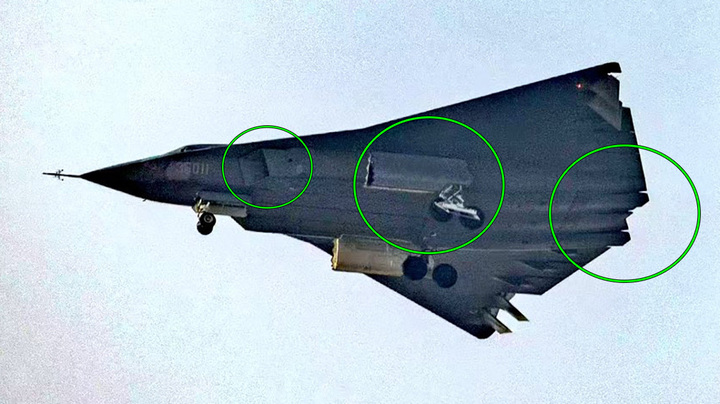
J-36 của Trung Quốc. Ảnh TWZ
5. J-XDS/J-36 (Trung Quốc)
Cuối năm 2024 và đầu năm 2025, nhiều hình ảnh về một loại máy bay chiến đấu không đuôi cỡ lớn xuất hiện tại Trung Quốc.
Dù chưa được xác nhận chính thức, phần lớn chuyên gia tin rằng đây là chương trình tiêm kích thế hệ 6 của Bắc Kinh. Thiết kế khí động học khác thường cùng kích thước lớn cho thấy máy bay có thể mang lượng nhiên liệu và vũ khí vượt xa các tiêm kích hiện nay.
4. PAK DA (Nga)
Dự án máy bay ném bom tàng hình PAK DA đã được nhắc tới trong nhiều năm nhưng tới nay vẫn là một trong những bí ẩn lớn nhất của ngành hàng không quân sự Nga.
Khác với Tu-160M siêu thanh, PAK DA được cho là áp dụng cấu hình cánh bay tương tự B-21 Raider. Các thông tin công khai về hệ thống động cơ, cảm biến và vũ khí vẫn cực kỳ hạn chế.
3. NGAD/F-47 (Mỹ)
Tổng thống Mỹ Donald Trump từng xác nhận chương trình tiêm kích thế hệ mới F-47 sẽ trở thành trung tâm của dự án NGAD.
Tuy nhiên, ngoài một số hình ảnh đồ họa và tuyên bố chính thức, gần như mọi chi tiết quan trọng đều được giữ bí mật. Không quân Mỹ được cho là đã tiến hành các chuyến bay thử nghiệm nguyên mẫu từ nhiều năm trước nhưng chưa từng công bố hình ảnh thực tế.
2. Type 096 (Trung Quốc)
Type 096 được xem là tàu ngầm hạt nhân mang tên lửa đạn đạo thế hệ tiếp theo của Trung Quốc.
Cho tới nay, gần như toàn bộ thông tin về dự án này đều dựa trên ảnh vệ tinh và đánh giá tình báo phương Tây. Nếu đạt được các mục tiêu đề ra, Type 096 có thể trở thành đối thủ trực tiếp của lớp Columbia của Mỹ và lớp Borei-A của Nga trong lĩnh vực răn đe hạt nhân chiến lược.
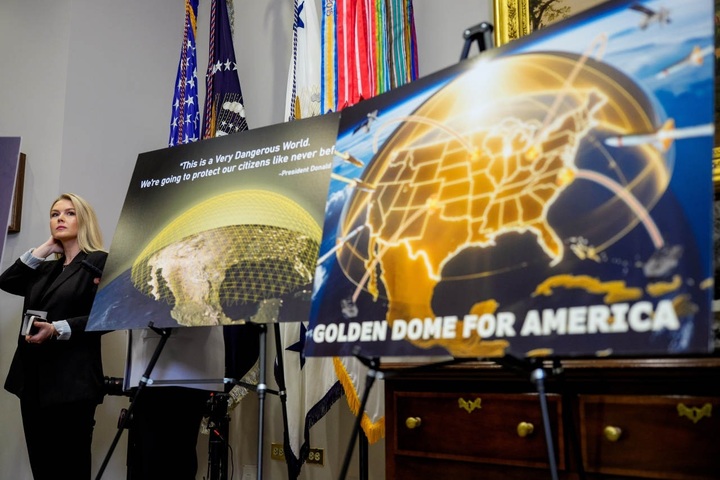
Chương trình Golden Dome của Mỹ. Ảnh Wikipedia
1. Golden Dome (Mỹ)
Đứng đầu danh sách là chương trình Golden Dome - dự án phòng thủ tên lửa không gian được Chính quyền Mỹ thúc đẩy từ năm 2025.
Theo các thông tin công khai, hệ thống có thể bao gồm hàng trăm hoặc thậm chí hàng nghìn vệ tinh cảm biến, cảnh báo sớm và đánh chặn trên quỹ đạo. Tuy nhiên, quy mô thực tế, công nghệ sử dụng và mức độ tham gia của các tập đoàn như SpaceX vẫn chưa được công bố đầy đủ.
Nhiều chuyên gia đánh giá đây có thể là chương trình quân sự tham vọng nhất kể từ sau Sáng kiến Phòng thủ Chiến lược (SDI) thời Chiến tranh Lạnh.
Điểm chung của các chương trình trên là phần lớn thông tin đều được giữ ở mức tối mật. Trong nhiều trường hợp, thế giới chỉ biết tới sự tồn tại của chúng thông qua ảnh vệ tinh, các tài liệu ngân sách hoặc những tuyên bố ngắn ngủi từ giới chức quân sự.
Khi cạnh tranh chiến lược giữa các cường quốc ngày càng gay gắt, các chương trình bí mật này có thể quyết định cán cân sức mạnh quân sự trong thập niên tới. Và giống như nhiều loại vũ khí mang tính cách mạng trong lịch sử, thế giới có thể sẽ chỉ thực sự hiểu rõ chúng khi chúng xuất hiện trong biên chế hoặc trên chiến trường.
German Engineers Develop a Salt-Air Battery That Could Revolutionize Long-Term Renewable Energy Storage
As renewable energy continues to expand worldwide, one of the greatest engineering challenges remains storing electricity for long periods when solar panels and wind turbines are not producing power. To address this problem, German researchers and engineers are exploring innovative energy storage technologies that rely on abundant, low-cost materials instead of critical minerals such as lithium, cobalt, and nickel.
One of the most promising developments is the **salt-air battery**, a technology designed to provide long-duration energy storage using materials that are widely available and environmentally sustainable.
Why Long-Term Energy Storage Matters
Renewable energy sources generate electricity only when natural conditions allow. Solar panels produce power during daylight hours, while wind turbines depend on favorable wind conditions. As renewable energy adoption increases, electrical grids require reliable storage systems capable of balancing supply and demand.
Current lithium-ion batteries are highly effective for short-duration storage but can become expensive for large-scale, multi-day, or seasonal energy storage applications.
Engineers are therefore searching for alternatives that are:
Lower cost
Safer to operate
Easier to scale
Less dependent on critical minerals
Environmentally sustainable
What Is a Salt-Air Battery?
Salt-air batteries use salt-based electrolytes and oxygen from the surrounding air as part of the electrochemical process that stores and releases energy.
Unlike conventional batteries that rely on scarce raw materials, salt-air systems utilize abundant resources that can be sourced from many regions around the world.
Because salt is inexpensive and widely available, the technology has attracted significant attention as a potential solution for large-scale renewable energy storage.
Key Advantages
**No Lithium Required**
Reduces dependence on global lithium supply chains.
**Uses Abundant Materials**
Salt is one of the most widely available resources on Earth.
**Long-Duration Storage Potential**
Can be designed to store renewable electricity for extended periods.
**Improved Safety**
Lower risk of thermal runaway compared to some battery chemistries.
**Grid-Scale Applications**
Suitable for supporting renewable power plants and electrical infrastructure.
Supporting Wind and Solar Power
Long-duration storage technologies are increasingly viewed as essential for achieving reliable low-carbon energy systems.
Salt-air batteries could potentially help:
Store excess solar energy generated during sunny periods.
Capture surplus wind power produced during high-wind conditions.
Supply electricity during periods of low renewable generation.
Improve grid stability and reliability.
Reduce dependence on fossil-fuel backup generation.
Challenges Still Ahead
While the technology is highly promising, researchers continue working to improve:
Energy density
Charging efficiency
System durability
Commercial scalability
Manufacturing costs
As with any emerging technology, large-scale deployment will depend on successful testing, economic viability, and long-term performance in real-world conditions.
A Potential Game-Changer for Clean Energy
Many energy experts believe the future electrical grid will rely on multiple storage technologies working together. Lithium-ion batteries may continue serving short-duration needs, while salt-based systems could provide economical storage over days, weeks, or even longer periods.
If successfully commercialized, salt-air batteries could help overcome one of renewable energy's biggest obstacles—storing clean electricity whenever it is needed, regardless of weather conditions.
**By replacing scarce minerals with one of Earth's most abundant resources, salt-air batteries could become a key building block of a cleaner, more resilient, and more sustainable energy future.**

 1. Pho 14 (Paris 13)
 Bạn đã thử quán nào trong danh sách này chưa? Hay còn quán phở nào ở Pháp mà bạn thấy "chuẩn vị Việt" hơn? Hãy chia sẻ địa chỉ yêu thích của bạn dưới phần bình luận để mọi người cùng khám phá nhé!